
The ubiquitous material of modern infrastructure—also known as concrete—forms the foundation of our homes, roads, and buildings, robust but not indestructible. Cracks in concrete slabs and foundations are common issues that can lead to severe structural problems and safety hazards if left unaddressed. That’s why understanding why concrete cracks happen, how to repair these fissures, and the best practices for maintaining concrete integrity—particularly the process and benefits of concrete crack repair before and after—is crucial for homeowners and property managers alike.
In this guide, we delve into the causes of concrete cracks and explore various repair techniques. We will also provide detailed answers to common questions about concrete maintenance, from the initial damage assessment to the final sealing of repaired cracks.

Why Do Concrete Slabs Crack and Become Uneven?
Concrete is one of the best choices for construction, yet for all its strength and durability, it’s not immune to the ravages of time (or nature). Several factors can lead to cracks and uneven surfaces in concrete slabs, including environmental conditions, soil movement, and structural stresses.
Environmental Conditions
Temperature fluctuations cause concrete to expand and contract, and that’s how it develops cracks over time. This process is exacerbated in regions with extreme weather changes, and so is the likelihood of damage. Additionally, excessive moisture from rain or snowmelt can seep into the concrete, causing it to weaken and crack.
Soil Movement
The ground beneath concrete slabs can shift due to natural causes such as earthquakes or human activities like construction work. When the soil moves, it can no longer support the slab evenly, again causing it to crack or become uneven. The issue is particularly prevalent in areas with clay soil, where moisture shifts force it to expand and contract significantly.
Structural Stresses
Concrete is designed to bear heavy loads, but over time, the stress from vehicles, machinery, and even foot traffic can cause it to crack. Additionally, improper installation, such as insufficient reinforcement or inadequate curing time, can compromise the slab’s structural integrity, making it more susceptible to damage.
Concrete Crack Repair Before And After
To better understand what’s going on, explore the transformation of a damaged concrete slab before and after repair. Pay attention to the surface and structure, and note every difference you can identify. Some will remain hidden, though, unless you are an expert—which is why calling a pro is almost always better over DIY.
Concrete Crack Before Repair
When the damage happens, concrete cracks typically manifest as unsightly lines and gaps across the surface of varying widths and lengths. Small hairline cracks may appear as fine, web-like fissures, barely noticeable at a glance but indicative of underlying stress. Larger cracks are more pronounced, with edges that may crumble or flake away, revealing rough, uneven textures within the concrete.

Due to accumulated dirt and moisture, dark streaks may form along the cracks, further highlighting the damage and giving the slab a worn, neglected appearance. In areas where water has infiltrated, the surrounding concrete might also show signs of discoloration or erosion.
Concrete Crack After Repair
The appearances before and after concrete block repair are incomparable. Hence, if everything has been done well, the chances are you’ll forget that the crack ever existed. How it looks in practice: formerly cracked areas are now seamlessly filled and leveled, with repair materials such as epoxy or polyurethane blending smoothly in. The surface appears compact, devoid of gaps and uneven sections.
Any previous discoloration is (or should have been) treated or overlaid with a sealant, restoring the slab’s original color and finish. The repaired areas are also of a smooth, consistent texture, free from the jagged edges and rough spots that characterized the damage.
How To Repair A Cracked, Uneven Slab
Repairing a cracked concrete slab involves several steps, each crucial to ensuring a durable and effective fix. The process can vary depending on the severity and type of the crack, so consider this a general approach.
1. Assess the Damage
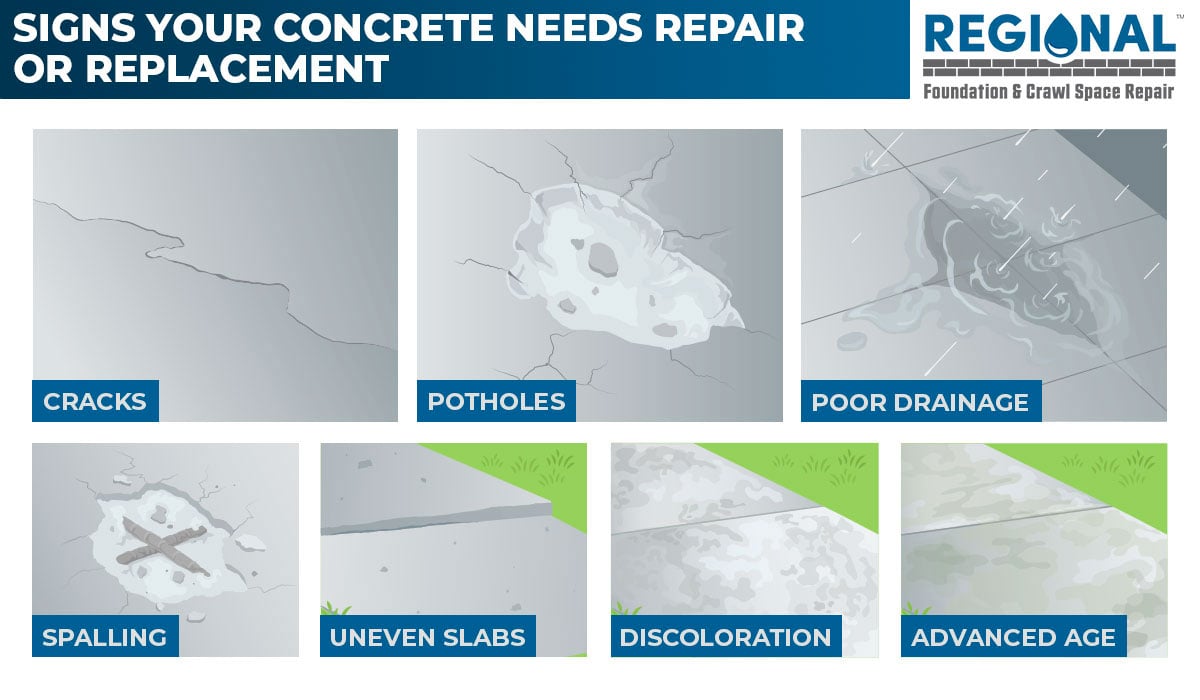
Begin by evaluating the extent of the damage. Identify the types of cracks present, such as hairline, diagonal, horizontal, or stair-step cracks. This assessment will determine what materials you need and which repair method to apply.
2. Gather Supplies
For most repairs, you will need a crack repair kit, which typically includes epoxy or polyurethane foam, a caulking gun, and safety equipment such as gloves and goggles. Additional tools like a chisel, hammer, wire brush, and concrete mixer may also be required.
3. Prep the Crack
Prepare the crack by cleaning it thoroughly. Remove any debris, dirt, and loose concrete using a wire brush and a chisel. This ensures that the repair material adheres properly to the existing concrete.
4. Repair the Crack
Inject the chosen repair material into the crack using a caulking gun. For wider cracks, an epoxy or polyurethane foam injection is often used due to its superior bonding strength and flexibility. Ensure the material fills the entire crack, and then smooth out the surface with a putty knife.
5. Seal the Repaired Crack
Once the repair material has cured, apply a concrete sealant over the repaired area to protect it from future damage. This sealant acts as a barrier against moisture, chemicals, and other environmental factors.
6. Document the Process
Try to have the concrete crack repair before and after documented and saved, including photos and notes on what has been done. It will come in handy in case something new comes up.
Does Polyurethane Foam Injection Work On Every Cracked Concrete Slab?
Polyurethane foam injection is a versatile, effective method for repairing many types of concrete cracks, but it is not universally applicable to all situations.
Suitable Scenarios
Polyurethane foam works well for filling and sealing cracks, particularly those caused by minor structural stress or soil movement. It is also effective for waterproofing and insulating properties.
Limitations
However, for severe structural damage or very large cracks, polyurethane may not be sufficient. In such cases, more extensive repair methods, such as full slab replacement or reinforcement with steel bars, may be necessary.
Can I Fix A Cracked Concrete Slab Myself Using Foam?
While DIY repairs using polyurethane foam are possible for minor cracks, never resort to it unless you understand the process, techniques, hazards, and limitations.
DIY Considerations
For small, non-structural cracks, a DIY approach can be cost-effective and relatively straightforward:
- Small, non-structural cracks
- Hairline fractures
- Minor surface fissures or slopes
- Narrow cracks up to 1/4 inch wide
Now, the question is: can you fix a cracked concrete foundation? You could fix these types of damages using foam and readily available repair kits—provided that you really know what you’re doing. Otherwise, professional assessment and repair are strongly recommended.
When to Call a Professional
For large or structural cracks, or if you’re unsure of the underlying cause of the damage, consult a professional. They can provide a thorough assessment and recommend the most appropriate repair method.
Is Lifting A Concrete Slab Using Foam Better Than Mudjacking?
Both foam injection and mudjacking are standard methods for lifting and leveling sunken concrete slabs, each with its advantages and disadvantages.
Foam Injection
Polyurethane foam injection involves injecting a lightweight, expanding foam beneath the slab. This method is quick, less invasive, and provides strong support with minimal disruption to the surrounding area.

Mudjacking
Mudjacking, or slabjacking, involves pumping a mixture of cement, sand, and water beneath the slab to lift it. While effective, this method is more labor-intensive and can be less precise than foam injection.
Foam Injection vs. Mudjacking: Comparative Analysis
Overall, foam injection is often preferred for its speed, precision, and minimal mess. The lightweight, expanding foam used in this method provides strong, durable support with minimal disruption to the surrounding area. It is particularly effective for small to medium-sized projects and can often be completed within a few hours. Additionally, foam injection is less invasive, requiring smaller injection holes and causing less damage to the surrounding landscape.
However, mudjacking remains a viable option for larger projects or where cost is a concern. Mudjacking uses mixtures, generally more affordable than foam injection.
How To Prevent Concrete Slabs From Cracking And Becoming Uneven
Preventive measures can significantly extend the lifespan of concrete slabs and reduce the likelihood of cracks and uneven surfaces.
- Proper Installation: Ensure the concrete is correctly mixed, poured, and cured. Adequate reinforcement with rebar or wire mesh (along with appropriate curing time!) helps prevent future cracks.
- Soil Stabilization: This is to prevent movement that leads to cracking, and may involve soil compaction, drainage improvements, or the use of geotextiles.
- Regular Maintenance: Routine inspections and maintenance, such as sealing cracks as soon as they appear and applying protective sealants, will help maintain the slab’s integrity.
Is It Worth Repairing Concrete Cracks?
Repairing concrete cracks is generally worth the investment. It restores the property’s structural integrity and aesthetic appeal, preventing further damage and potentially more costly repairs in the future.
What Is The Best Foundation Crack Repair?
The best foundation crack repair method depends on the crack type and underlying causes.
- Epoxy Injections: For structural cracks, epoxy injections offer a strong, permanent bond. However, in the case of structural cracks, the underlying cause of the crack must also be addressed.
- Polyurethane Foam: Polyurethane foam is excellent for sealing non-structural cracks and preventing water ingress.
- Combination Methods: Some cases require a combination of epoxy and polyurethane to address both structural and waterproofing needs.

Conclusion: Ensure Long-Term Concrete Integrity
Repairing concrete cracks, whether in slabs or foundations, is essential for maintaining structural integrity, safety, and property value. By understanding the causes of cracks and the most effective repair methods, homeowners and property managers can make informed decisions to ensure long-lasting results.
For professional foundation crack repair services, request a quote today to ensure your property remains safe and sound. Check out our concrete crack repair before and after image gallery for more information, and Contact Us to learn more about our solutions.