
Do cracks in your walls or gaps around your windows make you wonder if your house is settling too much? You are not alone: this is a common concern for many homeowners. Hence, “How long does it take for the house to settle?” is a valid question—even though it doesn’t come with a one-size-fits-all answer.
Understanding your house’s settling process can help you distinguish between regular adjustments and potential foundation issues that need immediate attention. We’ll help you clear up what signs to look for and when to seek professional help. By the end, you’ll be equipped with the knowledge to ensure your home remains safe and stable.
What is House Settling?
House settling refers to the gradual downward movement of a house as it adjusts to its foundation and the soil beneath it. This is a natural process: it occurs because the structure causes the soil to compact and shift slightly. That means some settling is expected and therefore no reason to worry. However, excessive settling can indicate underlying issues that need to be addressed ASAP to maintain the structural integrity of your home.
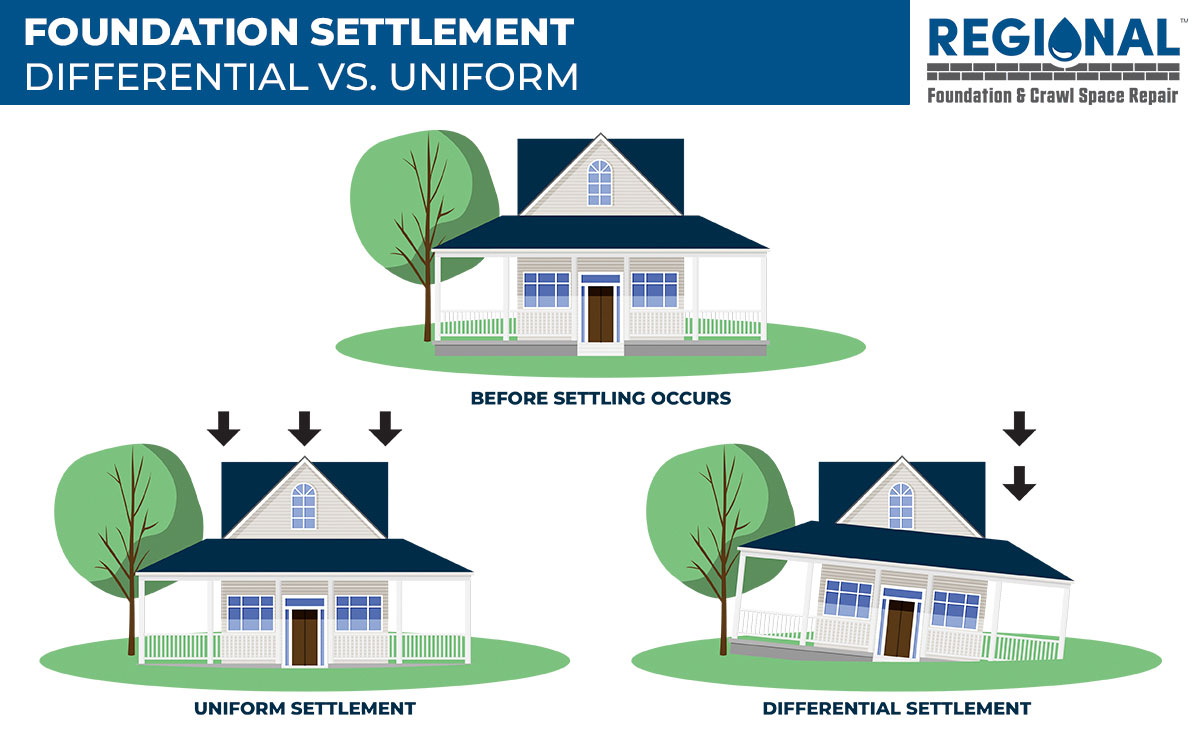
What Happens to the House When It Settles?
Hairline Cracks
Hairline cracks are small, thin gaps that appear in walls, ceilings, and foundations. If they are minor and don’t widen over time, you need not worry. This is normal settling, and such fissures can be easily repaired.
Small Foundation Cracks
Next in gradation are light cracks. Monitor them to ensure they don’t grow which can signify more severe structural issues. If these cracks expand or multiply, we strongly advise a professional evaluation.
Gaps
Settling can create small gaps around doors and windows. The issue with these are drafts and energy inefficiency, but on the good side, they can often be sealed without significant repairs.
However, the presence of gaps may indicate more extensive settling issues, so you better check out for other signs, just in case.
What Does Normal House Settling Look Like?
Normal house settling typically involves minor cosmetic issues, such as:
- Tiny hairline cracks in walls and ceilings: Usually less than 1/16 inch wide and do not indicate structural problems.
- Slightly uneven floors: Floors may develop minor slopes or dips that are not severe enough to impact use.
- Minor gaps around doors and windows: Small gaps that do not affect the operation of doors and windows.
These points generally do not indicate severe structural problems and can often be addressed with simple repairs.
When to Worry
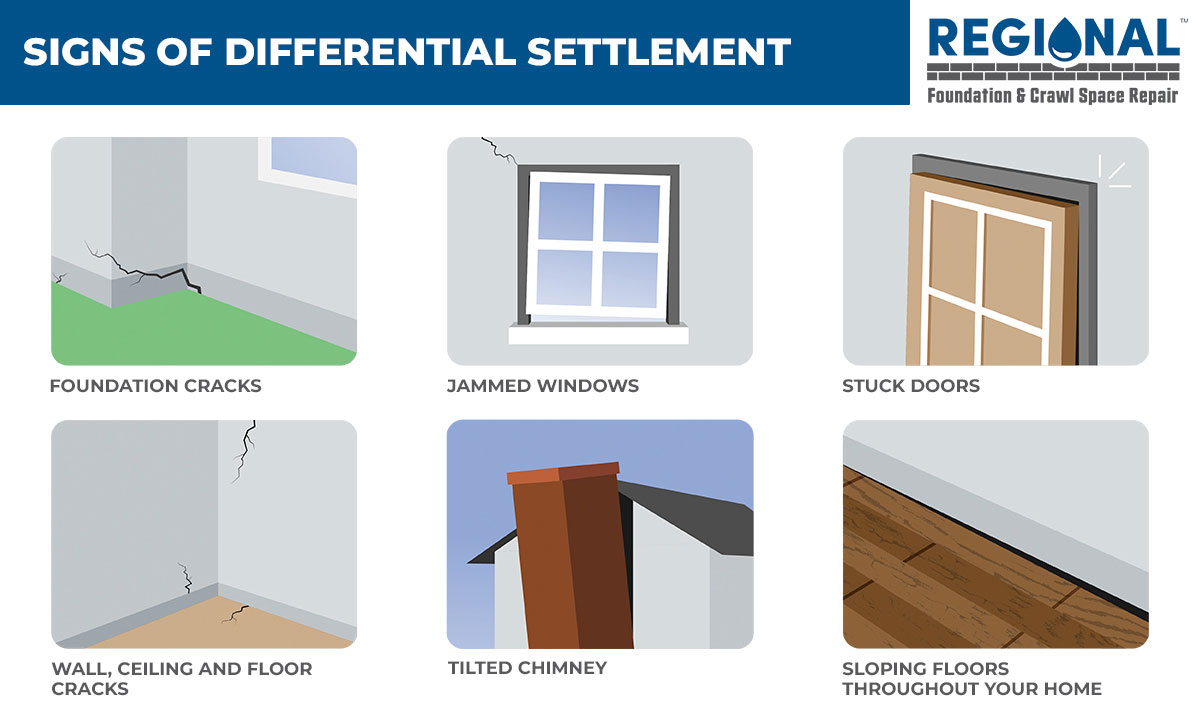
You should worry about house settling if you observe:
- Cracks that widen over time
- Doors and windows that stick or won’t close properly
- Cabinets and/or baseboards separating from the walls
- Noticeably uneven floors
- Large gaps between walls and floors
These signs can indicate more severe settling problems that require professional evaluation and repair.
Why Do Houses Settle?
Several factors contribute to house settling, each impacting the process in different ways.
Soil
The type of soil beneath a house is a significant factor. Expansive clay soils, which swell when wet and shrink when dry, often induce more dramatic settling. In contrast, stable soils like rock or well-compacted gravel provide a more solid foundation.
Wood and Concrete
Materials used in construction can also influence settling, as their shifts contribute to the overall process. Wood, for example, expands and contracts with changes in humidity, while concrete might develop cracks as it cures and adjusts to the underlying soil.
Weather & Seasonal Changes
Weather conditions, particularly fluctuations in moisture levels, affect the process further. Heavy rains, droughts, and temperature variations cause the soil to expand and contract, which in return makes the foundation shift.
Similarly, seasonal changes affect soil moisture and temperature, causing the soil to expand during wet seasons and contract during dry periods. This cyclical pattern contributes to ongoing settling over time.
What is Foundation Settling and How Long Does it Take?
This is a specific type of house settling related to the foundation’s interaction with the soil. The process can vary widely, but its significant part generally happens within the first two to three years after construction. Minor adjustments might also continue for many years as the house and soil adapt to environmental conditions.
Factors such as soil type, construction quality, and weather patterns all play a role in the duration and extent of foundation settling.
Issues Resulting from Foundation Settlement
Foundation settlement can lead to several problems, some of which may require immediate attention. The signs are generally the same as in a house settling: cracks in walls and ceilings, uneven floors, gaps, and sticking doors and windows.
What Causes Foundation Damage?
Foundation damage comes from several factors, including:
- Poor Soil Conditions: Soil that is too loose, expansive, or not properly compacted can lead to significant settling and foundation damage.
- Inadequate Drainage: Water pooling around the foundation can weaken the soil and cause the foundation to shift.
- Improper Construction Techniques: Poor construction practices, such as insufficient reinforcement or improper concrete curing, can lead to foundation problems.
- Tree Roots: Roots from nearby trees can grow under the foundation, causing shifts and cracks.
- Plumbing Leaks: Leaks from pipes can erode the soil under the foundation, leading to settling and damage.

When Do You Need Foundation Repair?
Foundation repair is necessary when settling leads to significant structural issues that compromise your home’s safety and integrity. Signs that indicate a need for repair include:
- Large or growing cracks that indicate movement or instability
- Doors and windows that no longer close properly due to shifting frames
- Persistent water leaks & ongoing moisture problems
- Noticeable shifts in the structure, such as visible tilting or unevenness
Addressing these issues promptly can prevent further damage and costly repairs.
Is Your House Just Settling, or Do You Need Foundation Repair?
Here is what to look for:
Monitor Cracks
Rapidly growing or widening cracks require immediate attention, so track the size and pattern of any crack you notice over time. Use a pencil to mark the ends and date them to track the progression. If you see the crevices extending or widening beyond the marks, take it as a sign that the foundation might be shifting.
Inspect Doors and Windows
Check for persistent alignment issues that do not resolve on their own. We already mentioned why doors that stick or windows that are difficult to open and close may indicate a problem. Also, look for gaps around the frames that weren’t there before, as that might imply the structure is moving.
Evaluate Floors
Look for significant unevenness or sagging that affects the space’s usability. Place a marble or small ball on the floor and see if it rolls to one side over a slope. Pay attention to creaking or unusual noises when walking, as these can also suggest underlying issues with the foundation.
If any (or all of) these issues persist or worsen, it’s time to consult a foundation repair specialist. Early intervention prevents minor nuisances from becoming major, costly repairs.
What The Foundation Repair Process Looks Like
Our foundation repair process generally involves:
- Assessment: A thorough inspection to determine the extent of the damage and the best repair method.
- Excavation: Digging around the foundation to access the areas that need repair.
- Installation: Installing piers, brackets, or other stabilization materials.
- Lifting and Leveling: Adjusting the foundation to the correct level.
- Backfilling and Clean-up: Filling in the excavated areas and restoring the landscape.
Foundation Leveling
Foundation leveling involves adjusting the foundation to correct uneven settling. This process may include using piers or other techniques that stabilize and level the concrete base.
Foundation Repair with Helical and Push Piers
Helical Piers
Helical piers are steel shafts with helix-shaped plates that are screwed into the ground to stabilize and lift the foundation. They are effective for homes built on unstable soil and can be installed with minimal disruption to the property.
Push Piers
Push piers are hydraulically driven into the ground until they reach stable soil or bedrock. They support the foundation and can lift it back to its original position or as close as possible without causing damage. Push piers are suitable for a wide range of soil conditions and offer a long-lasting solution to foundation problems.
Conclusion: Monitoring and Addressing House Settling
Understanding how long it takes for a house to settle and recognizing the signs of ordinary versus problematic settling is crucial for maintaining your home’s structural integrity. By keeping an eye on cracks, doors, windows, and floors, you can catch issues early and address them before they turn into severe damage.
If you suspect your house is settling beyond normal parameters or if you see signs of foundation shifting, don’t hesitate to contact us for expert foundation repair services and request a quote today!