
The basement, the lowest point of your home, is naturally prone to water issues, especially during winter. Snowmelt, freezing temperatures, and poor drainage often create the perfect conditions for basement flooding. Water tends to flow downward, making the basement a prime target for leaks and pooling. Having no proper winter basement waterproofing can lead to structural damage, mold growth, and expensive repairs. In this blog, we’ll explore the main causes of winter basement flooding and practical solutions to protect your home from water damage.

Top 5 Causes Of Basement Flooding In Winter
The winter season can be challenging for homeowners, especially when keeping basements dry. Here are the five most common reasons basements flood in winter:
Melting Snow And Ice
As noted by North Carolina Emergency Management, winter storms in North Carolina are often unpredictable and bring a mix of wintry conditions. These can include moderate snowfall, sleet, freezing rain, ice, or dangerously low temperatures, sometimes accompanied by strong winds. The excess water needs an outlet as snow and ice melt on warmer winter days. This water can pool around your home’s foundation if gutters and downspouts are clogged or poorly positioned. Without proper drainage systems, the pressure from this water can force it into your basement through cracks or gaps, increasing the risk of flooding.
Freeze-Thaw Cycles
A freeze-thaw cycle (FTC), as defined by the Great Lakes Integrated Sciences and Assessments, occurs when temperatures fall below 32°F, freezing water, and then rise above freezing, causing it to thaw. This natural process is a significant factor in winter basement flooding. As water in the ground and foundation materials freezes, it expands and contracts once it thaws. The repeated expansion and contraction weaken foundation materials over time, leading to cracks that allow water to enter your basement.
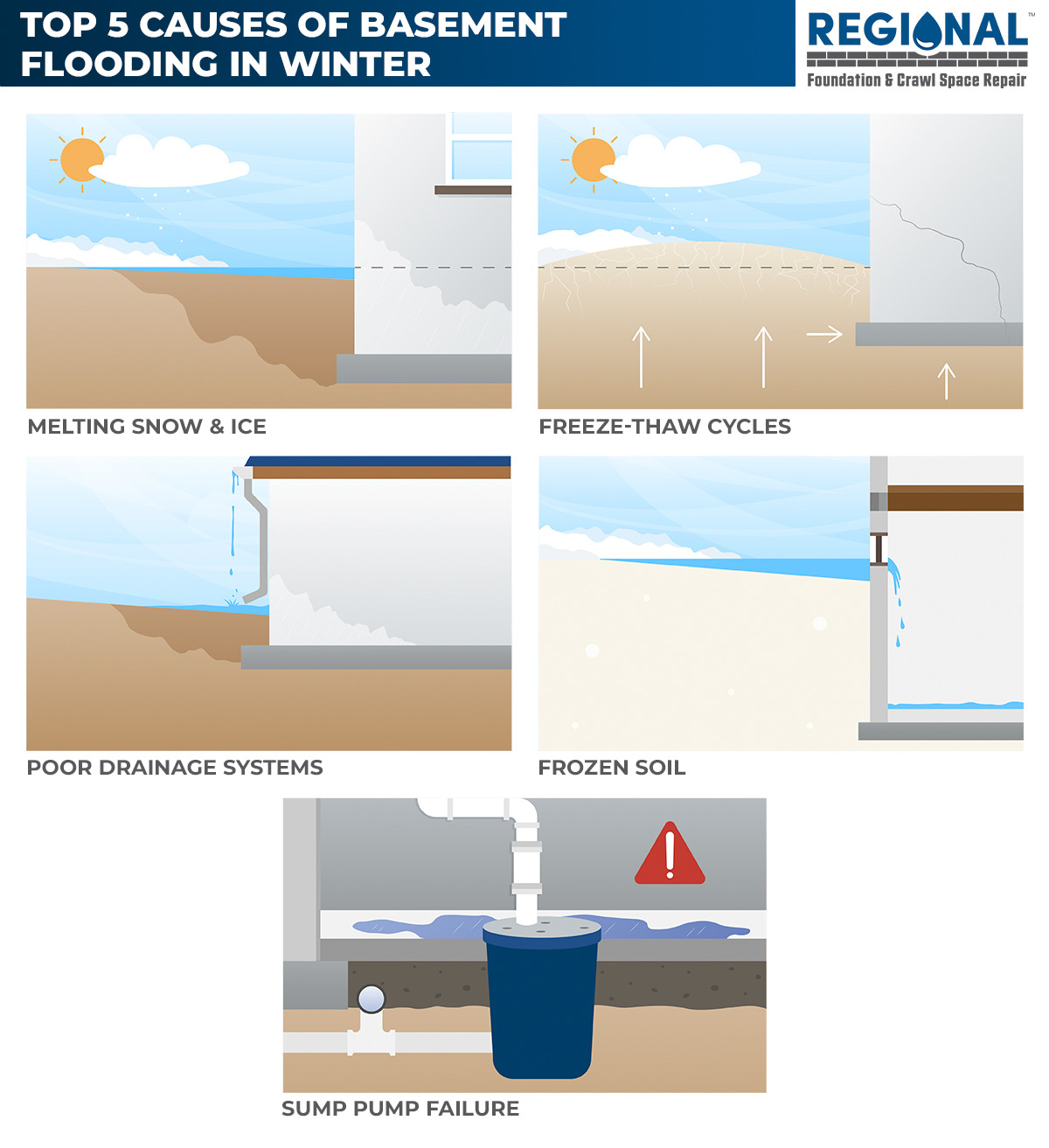
Poor Drainage Systems
Inadequate or poor drainage systems, such as clogged gutters or poorly installed downspouts, fail to divert water away from your home. Instead, water collects around your foundation, increasing hydrostatic pressure on basement walls and floors. Over time, this pressure causes leaks and flooding.
Frozen Soil
Frozen soil acts as a barrier to water absorption. When snow melts or rain falls, the water cannot seep into the frozen ground, forcing it to flow toward your home’s foundation. This surface runoff can enter your basement through small openings or exacerbate vulnerabilities.
Sump Pump Failure
A sump pump is your basement’s first line of defense against flooding. However, during winter, sump pumps can fail for various reasons. Extreme cold may freeze the discharge line, blocking water from exiting. Additionally, power outages from winter storms can leave sump pumps inoperable, leaving your basement unprotected during critical times.
How A Sump Pump Prevents Basement Flooding During Winter

According to South Dakota State University, sump pumps and drainage systems are essential for homes with basements or crawl spaces, especially in high water tables. These systems use perforated pipes around the foundation to channel water into a sump pit, where the sump pump removes it, reducing the risk of basement flooding.
During winter, sump pumps provide critical protection by addressing various seasonal challenges:
- Managing Snowmelt and Ice Thaw: Warmer winter days cause snow and ice to melt, producing excess water that seeps into the ground. A sump pump collects this water in the sump pit and pumps it away, preventing water intrusion and leaks in your basement.
- Handling Excess Groundwater: Frozen soil limits the ground’s ability to absorb water, causing snowmelt and rain to accumulate near your foundation. This increases hydrostatic pressure on basement walls, leading to leaks. A sump pump for winter relieves this pressure by redirecting water safely away from the home.
- Reducing Power Outage Risks: Winter storms often lead to power outages that can disable sump pumps. Many homeowners install battery backup systems or water-powered backup pumps to address this, ensuring their sump pump continues functioning during emergencies.
- Managing Water from Poor Drainage Systems: Improperly maintained gutters and downspouts can let water to pool around your foundation during snowmelt or rainfall. A sump pump manages this overflow by pumping excess water away from the home, preventing it from seeping into the basement.
- Protecting Against Plumbing Leaks: Winter can cause pipes to freeze and burst, flooding basements. A sump pump provides an added layer of protection by removing water from leaks or burst pipes, minimizing damage.
- Addressing High Indoor Humidity: Basements can experience high humidity in winter due to poor ventilation. When condensation accumulates, a sump pump can work alongside a dehumidifier to manage excess moisture and prevent water buildup.
Effective Crack Sealing And Interior Drainage Systems
Cracks in foundation walls or floors are common entry points for water, especially during winter. Addressing these vulnerabilities is critical to keeping your basement dry. Combining crack sealing with an interior drainage system provides a comprehensive solution to manage water intrusion effectively.
Crack Sealing

Foundation cracks form due to shifting soil, freeze-thaw cycles, or settling over time. These cracks allow water to seep into your basement, leading to dampness, mold growth, and structural damage.
- Epoxy or Polyurethane Injection: These materials seal cracks from the inside, preventing water from entering. Polyurethane is particularly effective for active leaks, expanding to fill gaps.
- Surface Sealing: Applying waterproof coatings or sealants to foundation walls can provide an additional barrier against moisture.
Sealing cracks stops immediate leaks and strengthens the foundation, preventing future water entry.
Interior Drainage Systems
Interior drainage systems work in tandem with sump pumps to manage water that enters your basement. These systems are designed to collect water and direct it away efficiently.
- Perimeter Drain Systems: Perforated pipes are installed along the basement’s perimeter, below the floor level. These pipes collect water that seeps through walls or the foundation and channel it to the sump pit for removal.
- Drain Tiles: Like perimeter systems, drain tiles are installed to capture and redirect water accumulating around the foundation.
- Floor Drains: Strategically placed floor drains can also help manage water that enters from plumbing leaks or other sources.
Proactive Waterproofing Tips To Prevent Basement Leaks In Winter
Preventing winter basement leaks requires taking proactive steps to address common water intrusion risks. By preparing your home ahead of time, you can reduce the likelihood of water leaks and protect your basement from damage.
- Maintain Gutters and Downspouts: Clean gutters and downspouts regularly to prevent clogs caused by leaves, ice, or debris. Ensure downspouts direct water 5–10 feet from your foundation to reduce water pooling near the basement.
- Improve Exterior Drainage: Grade the soil around your home to slope away from the foundation to proper water runoff. Consider installing a French drain system to manage groundwater and reduce hydrostatic pressure.
- Install Window Well Covers: Cover basement window wells with clear, weatherproof covers to prevent snow and rain from accumulating and leaking through window frames.
- Check Sump Pump Functionality: Test your sump pump regularly to ensure it is operational, especially before the winter season. Add a battery backup system to keep the sump pump running during power outages.
- Apply Waterproof Coatings: Apply waterproofing paint or sealant to basement walls and floors to add an extra layer of protection against moisture seepage.
- Install Interior Drainage Systems: Add interior drainage solutions, such as perimeter drains or drain tiles, to capture and channel water that seeps into the basement to a sump pump.
- Ensure Proper Ventilation: Maintain proper ventilation in your basement to prevent condensation buildup during winter. Use a dehumidifier if needed.
- Clear Snow Away from Your Foundation: After snowstorms, shovel all the snow away from your home’s foundation to prevent it from melting and pooling near the basement.
- Schedule a Professional Waterproofing Inspection: Hire a professional to assess your basement for vulnerabilities and recommend solutions tailored to your home’s needs.
Ready To Protect Your Basement This Winter?
Winter basement flooding isn’t unavoidable—you can take control. You can protect your home from water damage by identifying common causes and acting early, such as installing a dependable sump pump, sealing foundation cracks, and enhancing your drainage system. Winter waterproofing safeguards your property and ensures peace of mind throughout the season.
Don’t wait for water to find its way in—contact Regional Foundation & Crawl Space Repair today for expert waterproofing and foundation repair solutions to keep your basement dry this winter!