
A stable and strong foundation is crucial for any building. One innovative solution becoming increasingly popular is helical piers. In this article, we’ll review what helical piers are, their benefits, applications, how they’re installed, and more.
What Are Helical Piers?
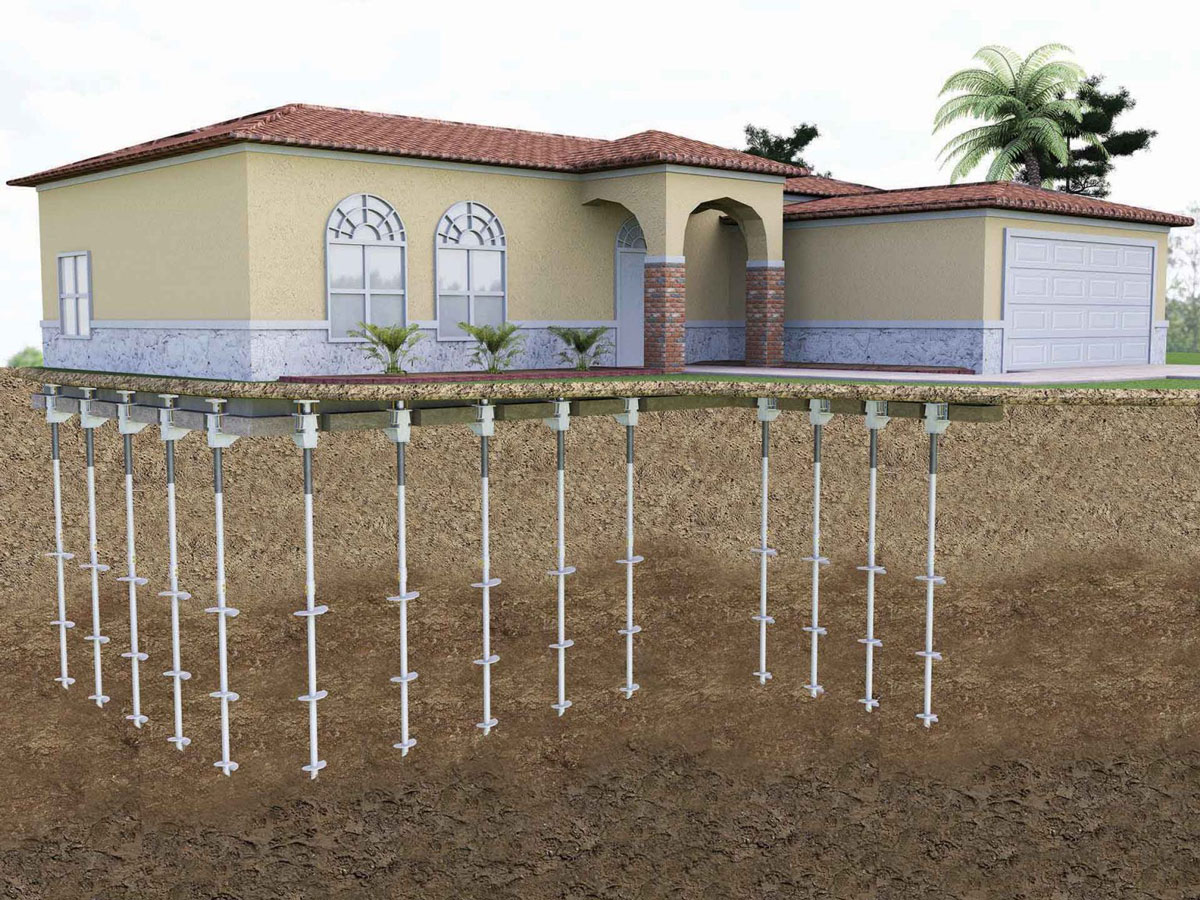
Helical piers, also known as screw piers, are not your typical construction tool. They are unique in their design, resembling large steel screws that are twisted into the ground to provide support for a foundation. This innovative approach is beneficial when the soil at a construction site is too soft or unstable for traditional foundations. Due to their distinct design and ease of installation, helical piers have gained popularity for securing or repairing foundations.
Helical piers are steel shafts with one or more helical-shaped plates welded to them. They can be used in various soil conditions and provide robust support for structures like buildings, bridges, and wind turbines. Over the years, improvements in helical pier technology have made them more durable and efficient. These advancements help reduce costs while ensuring buildings remain stable in different construction situations.

History Of Helical Piers
Helical piers have a rich history that dates back to the early 1800s. They were initially invented to support lighthouses, which required robust foundations to withstand harsh coastal conditions. Since then, advancements in materials and technology have significantly enhanced their design and effectiveness. These improvements have transformed helical piers into a reliable and cost-effective option for various construction projects, from homes to commercial buildings and large infrastructure projects like bridges and wind turbines.
Benefits Of Helical Piers
One of the main reasons helical piers are favored in construction is their myriad benefits. Helical piers are faster to install and less disruptive than traditional concrete piers that require significant excavation, longer installation times, and curing periods. Here’s a closer look at the advantages of helical piers:
Rapid Installation
Helical piers offer a significant advantage in meeting tight project deadlines. Their quick installation, which doesn’t require extensive digging or waiting for concrete to harden, provides relief, ensuring that construction projects can move swiftly.
Minimal Disturbance
Helical piers are put into the ground by turning them in, like a large screw, rather than hitting them in with a hammer. This method produces far less vibration and noise, making it a much quieter process. Because of this, there is less disturbance to nearby buildings and the environment around the construction site. This makes helical piers a more neighborhood-friendly choice for providing foundation support.
Versatility In Various Soil Conditions
Helical piers outperform traditional piers because they are adaptable to various soil conditions. They easily navigate and stabilize soft, loose, or waterlogged soils, providing reliable support even in challenging environments. This versatility empowers construction professionals to choose helical piers for projects in various locations.
Immediate Load-Bearing Capacity
One of the best things about helical piers is that they can support weight right after being put in the ground. This means construction projects can move faster because there’s no waiting time before the piers can handle the load.
Cost-Effectiveness
Helical piers are often cheaper than traditional foundation methods because they are quickly installed and don’t require heavy machinery.
Environmental Friendliness
Helical piers are an excellent choice for the environment. Installing them is less disruptive to the site, so the natural surroundings stay more intact. Plus, the process creates less pollution and reduces the overall carbon footprint of the construction project.
Applications Of Helical Piers
Helical piers are super versatile and can be used in many different projects. Here are some examples:
- Residential Construction: Helical piers provide a strong foundation for homes, especially in areas with problematic soil conditions or where traditional foundations are impossible.
- Commercial Buildings: They support large structures like office buildings, ensuring stability and safety while reducing construction time and costs.
- Bridges and Highways: Helical piers help build bridges and highways by providing a solid base in areas with unstable ground. They are ideal for supporting bridges, particularly in environmentally sensitive areas where minimal disturbance is crucial.
- Renewable Energy Installations: They support the infrastructure for solar farms and wind turbines, ensuring they stay in place even in harsh weather conditions.
- Boardwalks and Piers: Helical piers provide robust and reliable support for constructing boardwalks and piers over water.
- Retaining Walls and Slope Stabilization: They help stabilize retaining walls, preventing landslides and soil erosion.
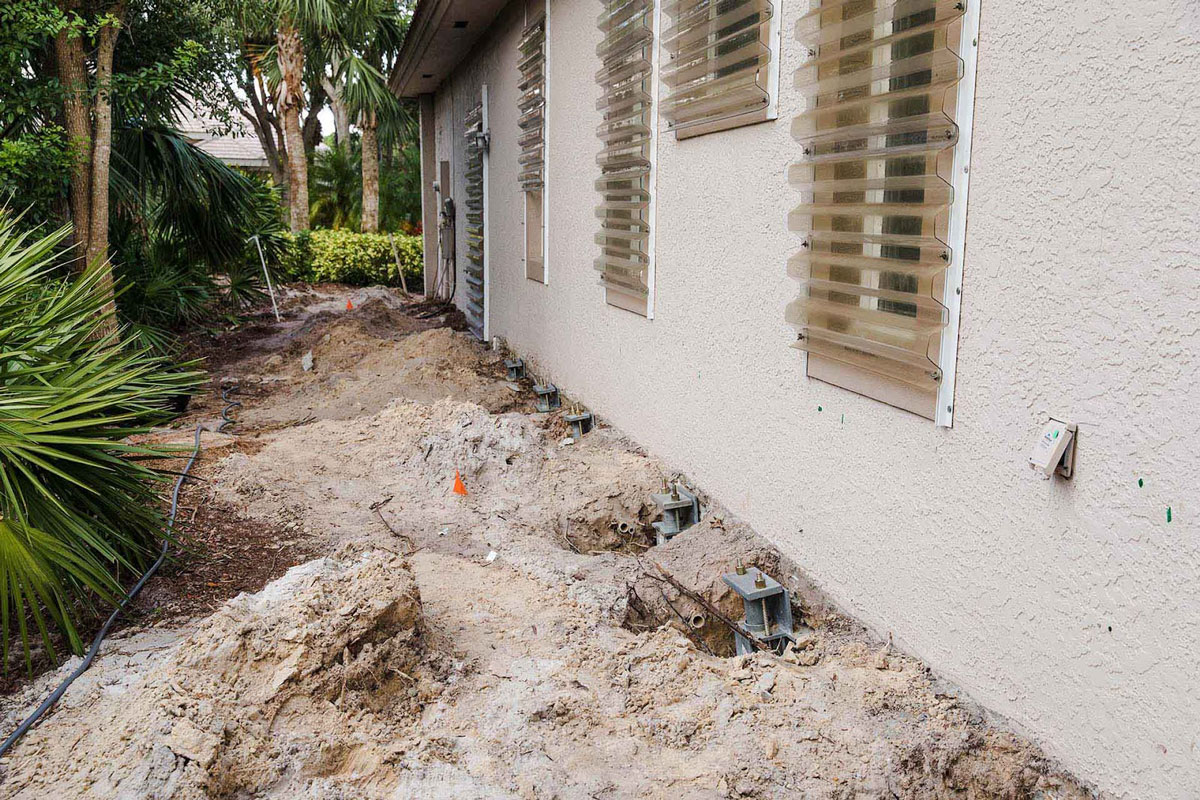
Helical piers are like the Swiss Army knife of foundation solutions, used in everything from home building to large infrastructure projects.
How Are Helical Piers Installed?
The installation process of helical piers is straightforward yet requires precision. Here’s a step-by-step overview:
Site Assessment
Engineers visit the site to understand the ground’s characteristics. They study the soil to see what kind it is and how strong it is. They also figure out how much weight the ground needs to support. This information helps them decide how to design the helical piers, including how long and wide they should be and how many are required to support the building or structure safely.
Pier Selection
The appropriate helical pier size and configuration are selected based on the site assessment. This ensures the piers can provide the necessary support for the structure.
Installation
The installation of helical piers is a precise and straightforward process. Using specialized equipment, the piers are rotated into the ground, much like giant screws. This rotation is carefully monitored, measuring the force required, known as installation torque. This measurement ensures that the piers are installed to the correct depth and can support the intended weight, providing a solid and stable foundation for the structure.
Load Testing
Once installed, helical piers can be load-tested to confirm their bearing capacity. This step ensures the piers meet the project’s requirements before proceeding with further construction.
Integration With Structure
Finally, the helical piers are connected to the building’s foundation. This step usually means securing the helical piers to concrete footings or other parts of the structure that help distribute the building’s weight evenly. Think of it like fastening the legs of a table to ensure it stands firmly and doesn’t wobble. By attaching the helical piers properly, the foundation becomes solid and stable, providing a reliable base for the entire building.
Challenges And Considerations
While helical piers have many benefits, they also come with some challenges. It’s essential to consider the type of soil, how much weight the piers need to support, and the specific details of the construction project. It’s crucial to evaluate these factors carefully. Additionally, using the right engineering techniques and following proper installation procedures are essential for ensuring that the helical piers work effectively and provide the necessary support for the building.
Helical Piers: Revolutionizing Modern Construction Foundations
Helical piers have revolutionized the construction industry with their myriad benefits and versatile applications. They offer a reliable, cost-effective, and environmentally friendly foundation solution for residential homes and large commercial buildings. As construction practices continue to evolve, helical piers are set to play an increasingly pivotal role in building more robust, more resilient structures.
Ensure Your Home’s Foundation Is Strong And Secure
Regional Foundation & Crawl Space Repair understands that your home is more than just a place to live—it’s your most valuable asset. Serving the Triad, Triangle, and Eastern North Carolina to the coast, our team is well-versed in identifying and addressing any issues your foundation might face. We provide thorough evaluations and tailor our solutions to fit your needs perfectly. Whether you require minor adjustments or major overhauls, you can count on us for high-quality service and dependable results.
Contact Regional Foundation & Crawl Space Repair today for a free estimate and take the first step towards a safer, healthier home.