
What happens when something safe and sound doesn’t seem so reliable anymore? Over time, even the strongest foundations can develop issues that threaten the integrity of your home. The good news is that most problems are correctable; even better: common foundation repair methods are usually all it takes. And when the standard repair methods do not suffice a few advanced techniques will put everything back in order before the situation develops into something unrepairable—or worse.
Signs Of Foundation Damage
Prevention is better than cure. Look for these common signs to identify issues early:
- Visible Cracks: Crevices in walls, floors, or the foundation itself are often the first indicators of foundation problems. Horizontal cracks often suggest severe issues. Vertical cracks, though less alarming, still need attention.
- Uneven Floors: Floors that slope or have noticeable dips can indicate foundation settling or shifting.
- Misaligned Doors and Windows: Difficulty in opening or closing doors and windows, or gaps around their frames, might be a sign of foundation movement.
- Water Damage: Persistent moisture or water pooling near the foundation can weaken its structure and lead to significant damage.

Causes Of Foundation Damage
Understanding the root causes of foundation damage is essential for both prevention and repair. Key factors include:
- Soil Composition and Movement: Expansive clay soils can swell with moisture and shrink during dry periods, causing the foundation to move.
- Poor Construction Practices: Inadequate soil preparation or the use of inferior materials.
- Natural Disasters: Earthquakes, floods, and other natural events can significantly impact foundation stability.
- Water Infiltration: Poor drainage or plumbing leaks can lead to water accumulation and compromise structural integrity.
Common Foundation Repair Methods
A variety of techniques are employed to address different foundation issues, each with its specific applications and benefits:
Steel Push Piers
Steel push piers are particularly useful in situations where significant settling has occurred. They offer a durable and permanent solution, and their steel construction provides added strength and resistance to corrosion.
Steel push piers are installed by driving heavy-duty steel tubes into the ground until they reach load-bearing soil. These piers are then attached to the foundation using steel brackets, providing a solid base to lift and stabilize the structure. The installation process involves hydraulic equipment that ensures the piers reach the necessary depth for support.
Helical Piers
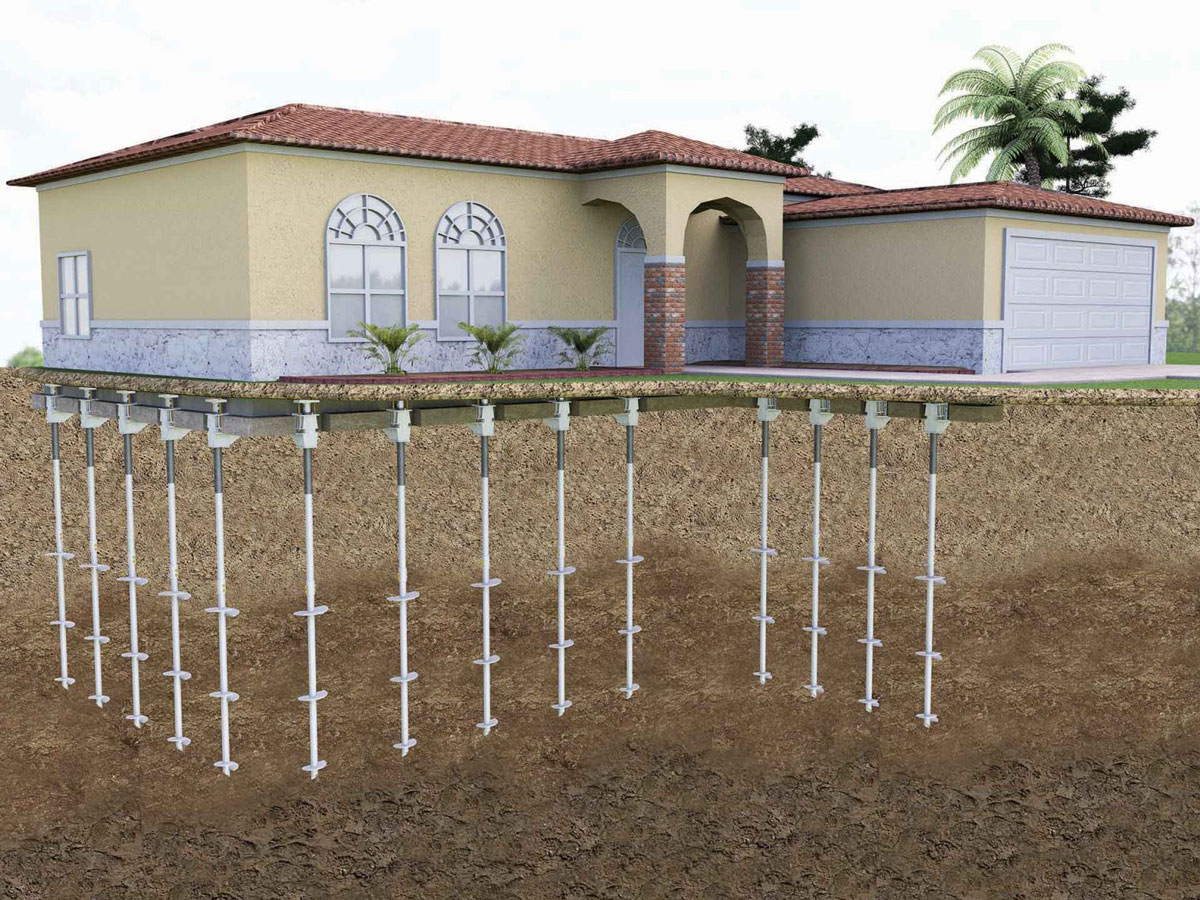
Helical piers are screw-like shafts with helical plates that allow them to be twisted deep into the ground. They are ideal for foundations built on unstable or expansive soils, and also versatile, suitable for both new construction and the repair of existing foundations.
The spiral design enables these piers to anchor securely, providing excellent load-bearing capacity. Installation is relatively quick and can be performed with minimal disruption to the surrounding area.
Polyurethane Foam Injection
Polyurethane foam injection is effective for minor settlement issues and can also improve soil stability around the foundation. The foam is lightweight yet strong, providing durable support without adding significant weight to the soil.
This concrete foundation repair method involves injecting high-density polyurethane foam under the foundation. As the foam expands, it fills voids and lifts the foundation back to its original level or as close as possible. The process is quick, usually taking only a few hours, and is minimally invasive, requiring only small injection holes.

Concrete Leveling
Also known as slabjacking, this is an effective and cost-efficient solution for large, flat surfaces like driveways, patios, and garage floors. The process restores the slab to its original level, eliminating trip hazards and improving structural integrity.
Concrete leveling is a quick procedure, often completed in a single day, with minimal disruption to the property. It involves pumping a slurry mixture (typically composed of cement, sand, and water) beneath a sunken concrete slab. As the voids are filled, the slab is lifted back into place.
Epoxy Injection
This concrete foundation repair method is particularly effective for narrow cracks and can be used in both vertical and horizontal applications. Epoxy injection fills and seals cracks in concrete. It’s a long-lasting solution that strengthens the foundation and protects against future issues.
The technique involves injecting a two-part epoxy resin into the cracks, which then hardens to form a robust, impermeable seal. It bonds the broken foundation surfaces together, restoring structural integrity and preventing water infiltration at the same time.
Mudjacking
Mudjacking is commonly used for sidewalks, driveways, and other large concrete surfaces that have settled unevenly. The process is less expensive than replacing the slab and provides a quick and effective repair.
Similar to slabjacking, mudjacking involves lifting sunken concrete slabs by pumping a mixture of water, soil, and cement underneath. The mixture (also known as “mud”) fills the voids beneath the slab and raises it back to its original position. Mudjacking can also improve the stability of the surrounding soil, reducing the risk of future settlement.
Carbon Fiber Straps
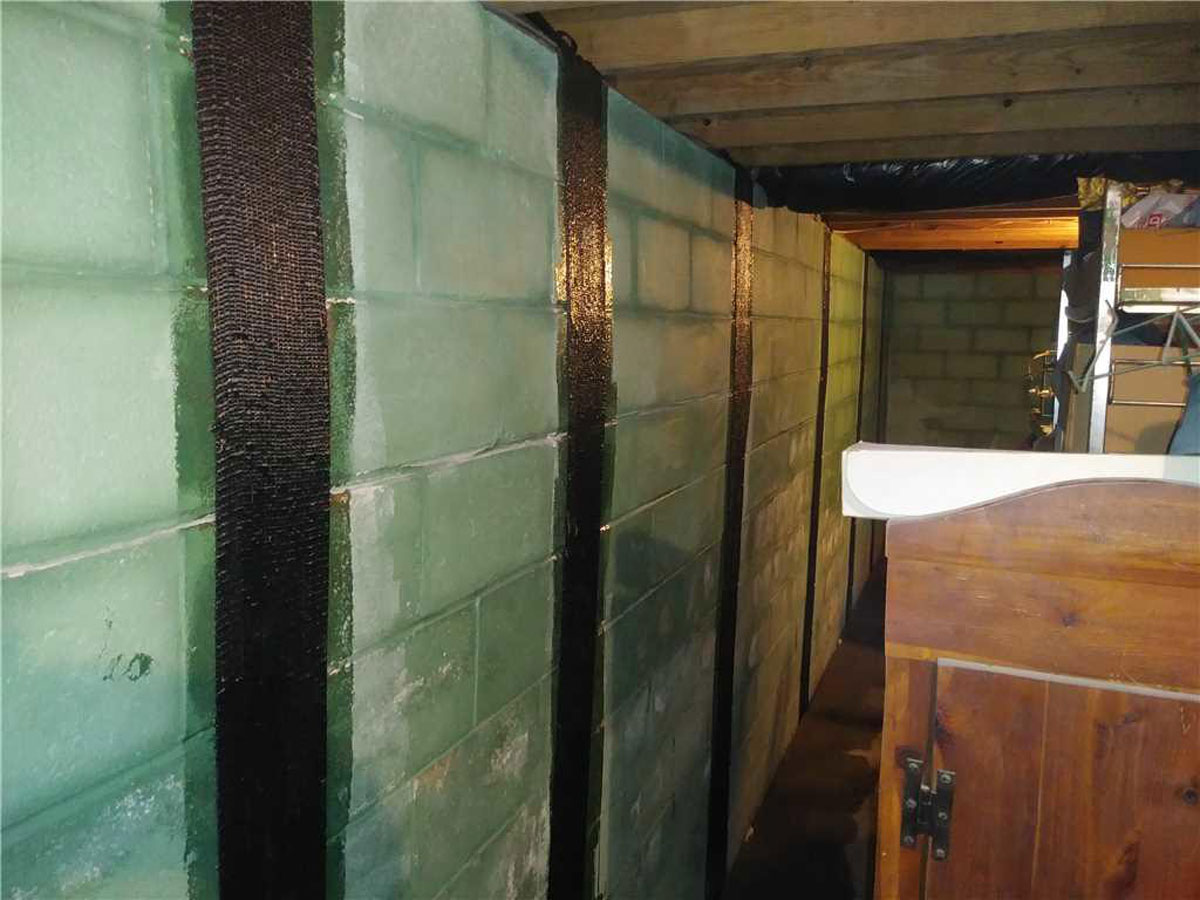
Carbon fiber reinforcement is a durable solution that stabilizes walls and prevents bowing or bulging. These straps are incredibly strong yet lightweight, hence particularly useful for addressing horizontal cracks in basement walls.
Installation involves bonding the straps to the wall using a high-strength epoxy adhesive.
Wall Anchors
Wall anchors stabilize bowed or leaning basement walls. This concrete foundation repair method is effective for severe wall damage and can be adjusted as needed to maintain stability.
The system involves installing steel rods through the foundation wall and anchoring them into the surrounding soil. Inside the basement, the rods are attached to steel plates that distribute the load and provide lateral support. Wall anchors can gradually straighten the wall over time, preventing further movement and improving structural integrity.
Underpinning
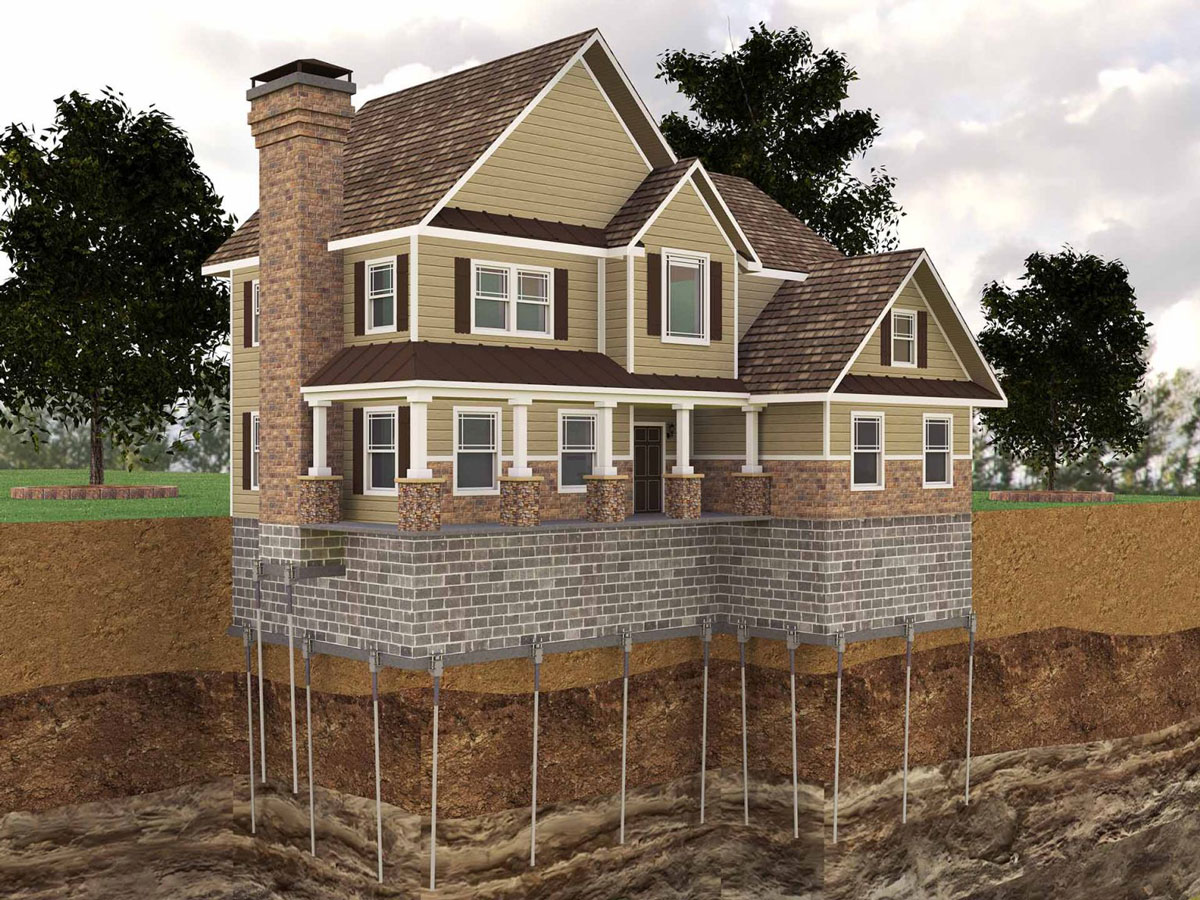
This technique is used to strengthen existing foundations that have experienced significant settlement or are expected to bear additional loads, such as adding extra stories to a building. Underpinning provides a long-term solution for stabilizing and strengthening the foundation, ensuring the structure’s safety and durability.
It involves extending the foundation to deeper, more stable soil layers using piers. The process typically involves excavating foundation sections and installing new support structures at greater depths.
Waterproofing
Waterproofing measures are implemented to protect foundations from water, reducing the risk of mold, mildew, and structural damage.
Tried-and-tested techniques include installing French drains, applying waterproof coatings to the exterior of the foundation, and ensuring proper grading around the property to direct water away from the foundation.
Cost Considerations
The cost of foundation repair varies widely based on factors such as the extent of the damage, the chosen repair method, and the foundation type. Here’s a comparative analysis:
- Sealants and Patches: Generally cost-effective for minor cracks but unsuitable for severe damage.
- Piering Methods (Concrete, Steel Push, Helical): More expensive due to the materials and labor involved but offer long-term stability.
- Polyurethane Foam Injection and Mudjacking: Mid-range costs, effective for lifting and leveling without extensive disruption.
- Advanced Techniques (Carbon Fiber, Root Barriers): Costs can vary, as this technique provides specialized solutions for specific issues.
- Waterproofing: Costs depend on the complexity of the system installed.
Preventative Measures
Preventing concrete foundation damage is more cost-effective than repairing it. Key preventative measures involve:
- Regular Maintenance: Conduct routine inspections to catch early signs of trouble.
- Landscaping and Drainage: Ensure proper grading and install drainage systems to direct water away from the foundation.
- Professional Inspections: Schedule periodic professional inspections to identify and address potential issues before they escalate.
DIY vs. Professional Concrete Foundation Repair
The risks associated with DIY foundation repair include improper assessment, inadequate solutions, and potential safety hazards. If you notice signs that indicate potential problems, call experts. A thorough professional inspection is the only way to accurately diagnose foundation issues, especially the ones you don’t even know are there.
Our services involve trained professionals who can accurately diagnose and address foundation problems. We have access to specialized tools and materials to ensure adequate, long-lasting concrete foundation repair solutions.
If you’re concerned about the state of your foundation or need a professional evaluation, request a quote from Regional Foundation & Crawl Space Repair today!